
How to Exercise Your Legal Right to Choose Your Repair Shop
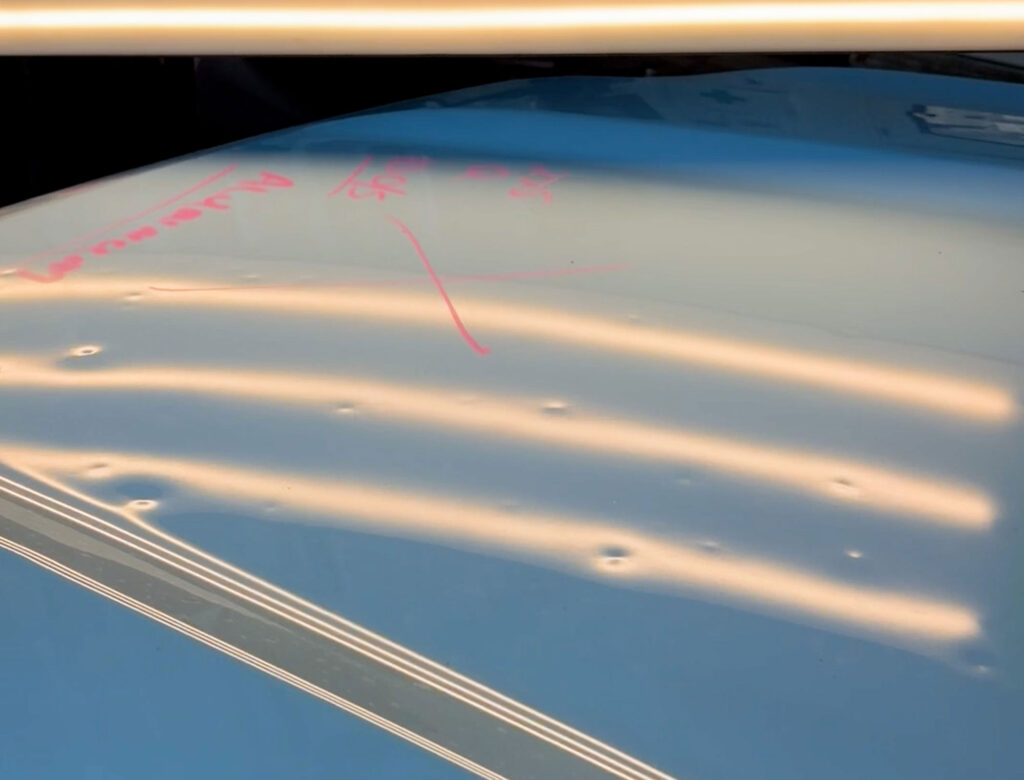
You look out your window during a Texas spring thunderstorm and hear golf-ball-sized hail pounding your car. Once the skies clear, you walk outside and spot dozens of shallow dimples scattered across your hood, roof, and trunk.
Hit by the August 28 hail in Spring or Cypress? Get a free hail inspection. We handle the insurance claim and help with your rental. More for Spring and Cypress drivers.
Your initial reaction might be to brush it off. The glass is intact, the doors still open, and the car drives fine. You tell yourself that paying a $500 or $1,000 insurance deductible isn’t worth it right now, or you worry that filing a claim will cause your monthly auto insurance premiums to skyrocket.
That reasoning is a financial trap. Skipping hail repairs to save a deductible almost always results in a massive loss down the road. Unrepaired hail damage destroys your car’s equity, wrecks its resale value, and creates expensive complications when it comes time to trade in, sell, or return a leased vehicle.
Here is the financial, technical, and insurance reality of hail damage, along with why addressing it right away is the smartest move for your wallet.
The Financial Math: Deductible vs. Trade-In Depreciation
The main reason car owners delay hail repairs is the out-of-pocket deductible. Writing a check for $500 or $1,000 today feels like a loss, especially for damage that seems purely cosmetic. However, looking at the long-term math reveals that ignoring the problem is far more expensive.
The Hail Repair Math |
|
|---|---|
|
Average Cost of Unaddressed Hail Repair: |
$4,000 to $6,000 |
|
| Standard Comprehensive Deductible: |
$500 to $1,000 |
|
NET EQUITY SAVED BY REPAIRING: |
$3,500 to $5,000+ |
The Deductible Illusion
When you skip a repair to save your $500 deductible, you are not actually saving $500. You are simply deferring a much larger financial loss. Average hail damage repairs range between $4,000 and $6,000, even when the dents appear light or minor to the untrained eye.
When you decide not to fix those dents, that $4,000 to $6,000 loss remains attached to your vehicle. You are trading a small, manageable out-of-pocket expense today for a major loss in equity tomorrow.
How Dealership Appraisers Evaluate Hail Damage
If you plan to trade in your vehicle at a dealership, appraiser tactics will quickly expose the cost of unaddressed hail damage. Dealership appraisers use specialized high-intensity inspection lights and digital scanning technology to inspect trade-ins.
When an appraiser spots hail damage, they do not offer a minor discount. They calculate the full retail cost required to restore the vehicle to sellable condition and subtract that full amount directly from your trade-in offer. If your car has $5,000 worth of hail damage, your trade-in offer drops by $5,000. By trying to save your $500 deductible, you end up handing over thousands of dollars in vehicle equity to the dealership.
Lease Return Penalties
If you lease your vehicle, ignoring hail damage is even more risky. Leasing companies inspect returning vehicles using strict wear-and-tear guidelines. While minor scuffs might pass inspection, hail damage is universally classified as excessive damage.
The leasing company will bill you for the full retail body shop cost to repair the vehicle after you return it, plus administrative fees. You will still have to pay for the repairs, but you will lose the ability to choose your own repair facility or leverage your insurance coverage efficiently.
Insurance Truths: Will Filing a Hail Claim Raise Your Rates in Texas?
The second major misconception holding drivers back is the fear of insurance rate hikes. Many vehicle owners assume that filing any claim automatically causes their monthly rate to shoot up. In Texas, the rules governing hail damage claims work differently than collision claims.
Comprehensive vs. Collision Coverage
Auto insurance is divided into distinct coverage types, and how a claim affects your status depends entirely on how the damage occurred:
- Collision Coverage: Covers impacts caused by driver error or accidents, such as hitting another car, a guardrail, or a pole. Because these events involve driver fault, filing collision claims can lead to rate surcharges.
- Comprehensive Coverage: Covers environmental events, weather damage, theft, vandalism, and collisions with animals. Hail damage falls strictly under comprehensive coverage.
Hailstorms are classified as non-fault events or “Acts of God.” You had no control over the weather, and you could not have prevented the storm from hitting your vehicle.
Texas Insurance Guidelines and Rate Surcharges
Under Texas insurance regulations and standard policy guidelines, insurance carriers generally cannot single out an individual policyholder with a rate surcharge for filing a non-fault comprehensive claim.
It is true that insurance companies sometimes adjust overall base rates across an entire zip code or region after a major catastrophic hail storm. However, those rate adjustments apply to every policyholder in that area, regardless of whether you personally filed a claim. If you choose not to file a claim after a storm, you will likely pay those higher regional premiums anyway, but without getting your car repaired. You end up subsidizing everyone else’s repairs while driving a damaged vehicle yourself.
The Danger of Waiting Too Long
Insurance policies include strict time limits for reporting damage, usually ranging from 6 to 12 months from the date of the storm. If you wait until you are ready to sell your car two years later, your insurance company can deny the claim entirely due to late reporting.
Additionally, if a second hail storm hits your vehicle while the first storm’s damage remains unfixed, insurance adjusters can apply two separate deductibles or deny coverage due to pre-existing damage. Filing your claim promptly after the storm protects your policy rights and keeps your coverage intact.
Deep Technical Context: Why Paintless Dent Repair (PDR) is the Superior Fix
When repairing hail damage, the method you choose matters just as much as filing the claim. Historically, fixing hail meant taking your car to a conventional body shop, where technicians sanded off the paint, filled the dimples with plastic body filler (Bondo), and repainted the entire panel. Today, Paintless Dent Repair (PDR) is the industry standard for hail restoration.
|
Repair Metric |
Independent PDR |
Insurance-Steered Body Shop |
|---|---|---|
|
Factory Paint Preserved |
Yes (100% Original) |
No (Sanded & Repainted) |
|
Turnaround Time |
Hours or Days |
2 to 4 Weeks |
|
Structural Vehicle History |
Clean (No Body Filler) |
Reported Bodywork |
|
Rust CarFax Value Impact |
Zero Negative Impact |
Potential Depreciation |
Preserving the Factory Finish
Your vehicle’s original factory paint is applied under cleanroom conditions and baked on at extreme temperatures during manufacturing. It offers superior durability, rust protection, and color consistency that aftermarket body shop repaints cannot match.
Conventional repair methods require grinding off that factory clear coat and paint. Over time, aftermarket paint can fade differently than original panels, reveal blend lines under sunlight, or suffer from clear coat peeling. PDR preserves your original factory paint entirely, maintaining the structural integrity and long-term durability of your vehicle’s finish.
Metal Elasticity and Mechanical Memory
Modern automotive panels made of sheet steel or aluminum possess natural mechanical elasticity. When hail strikes a panel, it stretches the metal outward into a shallow bowl shape without necessarily cracking the paint coat.
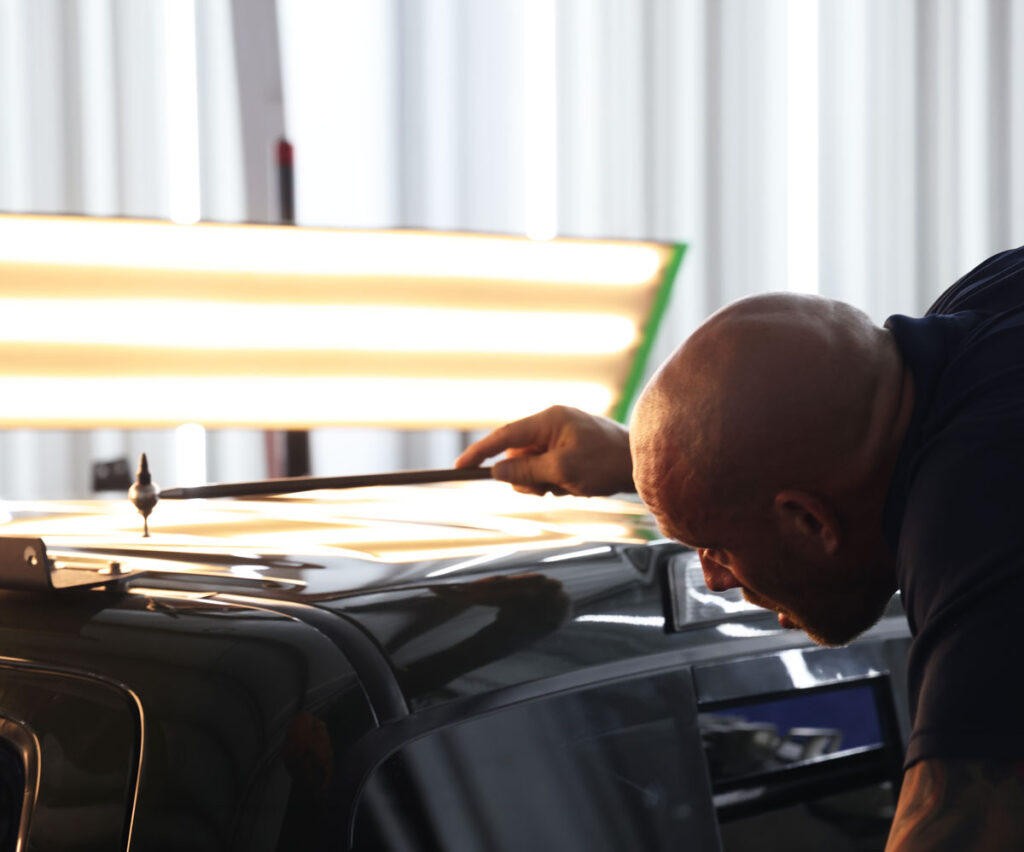
PDR technicians utilize specialized LED glare boards to illuminate the micro-topography of the dented panel. Using custom-engineered stainless steel push rods, specialized access tools, and precision glue-pulling systems, the technician massages the metal back into its original position from behind the panel. By working with the metal’s natural memory, the technician restores the flat geometry without disturbing the outer paint matrix.
Turnaround Time and Cost Efficiency
Conventional body shop repairs require panel sanding, primer drying, paint spraying, clear coating, and multi-day curing cycles. This process often leaves your car stuck in the shop for three to four weeks.
In contrast, a dedicated PDR facility can complete a comprehensive hail repair in just two to five days. This quick turnaround minimizes rental car expenses, reduces hassle, and gets your vehicle back on the road fast.
4 Immediate Steps to Take After a Houston Hail Storm
- Document the Damage Immediately: Park your car in indirect sunlight or under shaded light where dings are visible. Take clear photos and videos of every damaged panel, including the hood, roof, trunk, door tops, and side moldings.
- Record Storm Details: Note the exact date, time, and location where the hail occurred. Insurance adjusters cross-reference hail claims with weather radar data to confirm the storm event.
- Open a Comprehensive Claim: Contact your insurance provider to report the storm damage. Inform them that you intend to use a professional PDR repair facility of your choice. You are legally entitled to choose your repair shop in Texas; you do not have to use the insurance company’s high-volume preferred panel shop.
- Schedule an Expert PDR Evaluation: Bring your vehicle to a certified paintless dent repair facility for a professional digital inspection before signing off on any preliminary insurance estimates.
Frequently Asked Questions About Houston Hail Repair
Connect with the Pros
Need an honest assessment of your vehicle after a storm? You don’t have to use your insurance company’s suggested shop. Stop by to see us or connect with our team through any of the channels below.
📍 Visit the shop: 1729 Brittmoore Road, Unit G, Houston, TX 77043
📞 Call us: (281) 660-3178
📅 Schedule: americandentspecialists.com
Need a Paintless Dent Repair Quote?
Just send us pictures of your damage and we’ll get you a personalized quick estimate!